The sun came out today, and for the first time this year there was a definite warmth to it. Along with the sun came the first of the season’s bumblebees.
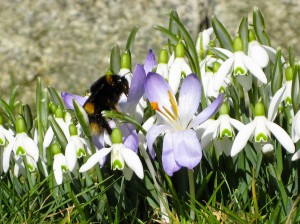
These are the queen bees foraging for food before looking for a suitable nest site. Although much of the media’s attention has been on the plight of the honeybee (mainly due to the huge potential losses for commercial beekeepers), bumblebees also play a huge part in plant pollination. The fact that bumblebees do not stockpile honey for an overwintering colony has led to them being less recognised as an endangered species. In fact, according to Wikipedia, three of our native bumblebees have already become extinct and another six are in serious decline.
It is therefore of vital importance that we garden with bumblebees in mind and try to provide a range of plants that flower throughout the year, particularly in early spring when the queen bees are about. If you are stuck for ideas why not try the Bumblebee Conservation Trust’s website which lists a number of bee friendly plants. If you would like to add in some earlier flowering species why not plant some crocus and snowdrops in a sunny part of your garden, with sweet box (sarcocca confusa) and clematis armandii in shadier parts. Not only will you be helping the bees, but you will brighten your own day with the sight and scent of these early flower plants.